Showing posts with label Technology. Show all posts

Are 3D films more psychologically powerful than 2D?

The revival of 3D movies in recent years has prompted much debate among fans and critics. Some say it's gimmicky and too expensive. Others have heralded the return of the technology as the industry's saviour. A key claim in favour of 3D technology is that it makes for a more realistic, immersive experience. But does it really?

Brendan Rooney and his colleagues at University College Dublin showed 8 different movie clips (ranging from 13 to 68 seconds in length) to 27 participants (13 males; average age 27). The gory clips were chosen deliberately for their disgusting content and were taken from Bugs 3D, Friday 13th, Jaws 3-D and Frankenstein.

Each participant watched the clips alone in a mini-cinema on campus featuring a 2.5m x 2.5m screen. Crucially, half the participants viewed the clips in 3D, the others in 2D. To ensure any effects of the 3D format were not due to novelty, all the participants watched an abridged version of Journey to the Centre of the Earth in 3D, at least 24 hours prior to the study proper.

Participants in the 3D condition reported finding the film clips more realistic. They also had a higher heart rate whilst watching the clips compared with participants in the 2D condition. However, there was no difference in amount of skin conductance (another measure of arousal) between the two groups, and no difference in how much they said they enjoyed the clips.

Rooney and his colleagues explain that skin conductance - that is, the skin's sweatiness - is influenced only by the sympathetic nervous system (which triggers the fight or flight response) and not by the parasympathetic nervous system (which calms us down). By contrast, heart rate is influenced by both. This suggests to them that the calming parasympathetic nervous system is less active in viewers of 3D. Why? Well, one theory for how we calm our emotions during films is by reminding ourselves that they're not real. The 3D viewers said they found the viewing experience more realistic and it's possible that this made it more difficult for them to step outside of the experience, leaving their emotional response relatively unchecked. The researchers concede that the causal direction could also run the other way - the 3D viewers raised heart rate could cause them to perceive the experience as more realistic. Most likely the influences are bi-directional.

Is it a good thing that the 3D clips were rated as more realistic and triggered more physiological arousal? The 3D viewers didn't rate the clips as any more enjoyable, but then they only gave these ratings afterwards, which means they were relying on their memory of the experience. Also, they had no baseline to measure their ratings against. Finally, perhaps "enjoyment" is the wrong word when it comes to disgusting movie clips. If the study were repeated with a different genre, perhaps 3D viewers would give higher enjoyment ratings.

Rooney's team stressed that this was an exploratory study and that more research is clearly needed. For now they concluded the "suspension of disbelief is ... assisted by stereoscopic depth, with associated increases in reported perceived apparent reality and in heart-rate ... ".

_________________________________ ResearchBlogging.org

Rooney, B., Benson, C., and Hennessy, E. (2012). The apparent reality of movies and emotional arousal: A study using physiological and self-report measures Poetics, 40 (5), 405-422 DOI: 10.1016/j.poetic.2012.07.004

--Further reading--
Right-handers sit to the right of the movie screen to optimise neural processing of the film.

Post written by Christian Jarrett for the BPS Research Digest.
You have read this article biological / Emotion / environmental / Technology with the title Technology. You can bookmark this page URL https://psychiatryfun.blogspot.com/2012/11/are-3d-films-more-psychologically.html. Thanks!

Does owning an iPod make you happy?

As Apple launches its latest shiny products and the media work up their usual lather of excitement, a timely study has tackled the question of whether owning an iPod digital music player will make you happy.

Antje Cockrill surveyed 241 people (mostly students aged 18 to 25) about their digital music player and their life satisfaction. Seventy-seven per cent of the sample were iPod owners, with the remainder owning non-Apple brands of music player. The participants were asked how much they liked the design of their music player; whether they judged others by their playlists (or felt judged); whether they felt a bond with others who own the same brand of player; whether they felt their player was "cool"; whether, if they owned an iPod, they attended iParties (where playlists are shared and iPods compared); and whether they used their music player to create a private, "auditory bubble".

Answers to these questions were entered into an analysis alongside age, gender and employment status and the take-home finding is that for iPod owners, nearly 25 per cent of the variance in their life-satisfaction was associated with their answers to the music-player questions. "Considering the very wide range of potential variables that can influence life satisfaction for an individual, this is a very high result," Cockrill said. By contrast, for non-iPod owners, their answers to the music-player questions were virtually irrelevant to their life satisfaction.

The finding for iPod owners is consistent with a seminal theory proposed by Russell Belk in the 1980s that the things we own come to represent our extended selves. Also relevant is research showing how young people use their music preferences to express their identities and to fit in with their friends. It would appear that iPod owners gain satisfaction from their Apple toy and from identifying with, and gaining approval from, other owners of what they consider to be a "cool" product.

Other results to come from the study: iPod users reported using their music players more than non-iPod owners; iPod users were more likely to say their music player helped make boring activities more tolerable; and just under half of the iPod owners said it was important for them to own an Apple player rather than a different brand.

Cockrill said that Apple "can be congratulated for having created a product that has ... managed to retain the elusive 'cool factor'". However, she cautioned that her results also give cause for concern - she highlighted the likely negative consequences for people who desired an iPod but could not afford one, and for iPod owners who lost their treasured gadget.

Besides the dependence on a largely student sample, the study has another weakness - no attempt was made to create a psychological barrier between the questions about music players and the questions about life satisfaction, for example by presenting irrelevant questions or a distracting filler task. Although the order of questions was randomised, it's possible that thoughts about music players would have been foremost in the minds of many participants when they reported their life satisfaction. That said, it remains the case that only the iPod owners showed an association between their music-player answers and life-satisfaction.

Even more important - has this study really answered the question posed in its title, regarding whether iPods make us happy? Arguably, all the results show is that the happiness of people who care about their image, music players and trendy brands is affected by these very issues (hardly a surprise) and, furthermore, that these people tend to own an Apple iPod, the market-leading product (again, not that surprising). To probe the actual influence of the Apple iPod on people's happiness, future research would need to measure people's attitudes towards music and brands and follow them over time - to see if becoming an iPod owner (versus the owner of a different branded player) made any difference to their happiness.
_________________________________

  ResearchBlogging.orgCockrill, A. (2012). Does an iPod make you happy? An exploration of the effects of iPod ownership on life satisfaction. Journal of Consumer Behaviour, 11 (5), 406-414 DOI: 10.1002/cb.1385

--Further reading-- Steve Jobs gift to cognitive science.
How listening to an iPod shrinks your sense of personal space

Post written by Christian Jarrett for the BPS Research Digest.
You have read this article Emotion / Social / Technology with the title Technology. You can bookmark this page URL https://psychiatryfun.blogspot.com/2012/10/does-owning-ipod-make-you-happy.html. Thanks!

How the mere presence of a mobile phone harms face-to-face conversations

You sit down for a chat with a new acquaintance but before you're even started they've placed their phone carefully on the table in front of them. Why? Are they waiting for a call? Do they just enjoy marvelling at its chic plastic beauty? Either way, a new study suggests this familiar habit could be interfering with our attempts to socialise.

Andrew Przybylski and Netta Weinstein asked 34 pairs of strangers to spend 10 minutes chatting to each other about "an interesting event that occurred to you over the past month". The participants sat on chairs in a private booth and for half of them, close by but out of their direct line of view, a mobile phone was placed on a table-top. For the other pairs, there was a note-book in place of the phone.

After they'd finished chatting, the participants answered questions about the partner they'd met. The ones who'd chatted with a phone visible nearby, as opposed to a notebook, were less positive. For example, they were less likely to agree with the statement "It is likely that my partner and I could become friends if we interacted a lot". They also reported feeling less closely related to their conversational partner.

A second study with a fresh set of participants was similar, but this time some of the 34 pairs of strangers chatted about a mundane topic, whilst others chatted about "the most meaningful events of the past year." Again, some of them did this with a phone placed nearby, others with a notebook in the same position.

For participants with the notebook visible nearby, having a more meaningful conversation (as opposed to a casual one) boosted their feelings of closeness and their trust in their conversational partner. But this extra intimacy was missing for the participants for whom a mobile phone was visible. When the researchers debriefed the participants afterwards they seemed to be unaware of the effects of the mobile phone, suggesting its adverse effects were at a non-conscious level.

Why should the mere presence of a mobile phone interfere with feelings of social intimacy in this way? Przybylski and Weinstein can't be sure, but they think that modern mobile phones might trigger in the mind automatic thoughts about wider social networks, which has the effect of crowding out face-to-face conversations. Considered in this way, the present findings are an extension of the wider literature on what's known as non-conscious priming (for example, the presence of a brief-case makes people more competitive).

A weakness of the study is that the researchers didn't compare the effects of the presence of a mobile phone against an old-fashioned land-line phone, or other forms of technology. So it's not clear how specific the effect is to mobile phones.

Also, as the authors acknowledge, this is just a preliminary observation that poses all sorts of future questions requiring further research. For example, did the presence of a mobile phone alter the behaviour and conversational style of the participants, or did it merely change their perceptions of the social experience? Would the effects be the same for people who are already in a close relationship?

But for now, Przybylski and Weinstein concluded: "These results indicate that mobile communication devices may, by their mere presence, paradoxically hold the potential to facilitate as well as to disrupt human bonding and intimacy."

_________________________________ ResearchBlogging.org

Andrew K. Przybylski, and Netta Weinstein (2012). Can you connect with me now? How the presence of mobile communication technology influences face-to-face conversation quality. Journal of Social and Personal Relationships DOI: 10.1177/0265407512453827

Post written by Christian Jarrett for the BPS Research Digest.
You have read this article Social / Technology with the title Technology. You can bookmark this page URL https://psychiatryfun.blogspot.com/2012/09/how-mere-presence-of-mobile-phone-harms.html. Thanks!

Most brain imaging papers fail to provide enough methodological detail to allow replication

Amidst recent fraud scandals in social psychology and other sciences, leading academics are calling for a greater emphasis to be placed on the replicability of research. "Replication is our best friend because it keeps us honest," wrote the psychologists Chris Chambers and Petroc Sumner recently.

For replication to be possible, scientists need to provide sufficient methodological detail in their papers for other labs to copy their procedures. Focusing specifically on fMRI-based brain imaging research (a field that's no stranger to controversy), University of Michigan psychology grad student Joshua Carp has reported a worrying observation - the vast majority of papers he sampled failed to provide enough methodological detail to allow other labs to replicate their work.

Carp searched the literature from 2007 to 2011 looking for open-access human studies that mentioned "fMRI" and "brain" in their abstracts. Of the 1392 papers he identified, Carp analysed a random sample of 241 brain imaging articles from 68 journals, including PLoS One, NeuroImage, PNAS, Cerebral Cortex and the Journal of Neuroscience. Where an article featured supplementary information published elsewhere, Carp considered this too.

There was huge variability in the methodological detail reported in different studies, and often the amount of detail was woeful, as Carp explains:
"Over one third of studies did not describe the number of trials, trial duration, and the range and distribution of inter-trial intervals. Fewer than half reported the number of subjects rejected from analysis; the reasons for rejection; how or whether subjects were compensated for participation; and the resolution, coverage, and slice order of functional brain images."
Other crucial detail that was often omitted included information on correcting for slice acquisition timing, co-registering to high-resolution scans, and the modelling of temporal auto-correlations. In all, Carp looked at 179 methodological decisions. To non-specialists, some of these will sound like highly technical detail, but brain imagers know that varying these parameters can make a major difference to the results that are obtained.

One factor that non-specialists will appreciate relates to corrections made for problematic head-movements in the scanner. Only 21.6 per cent of analysed studies described the criteria for rejecting data based on head movements. Another factor that non-specialists can easily relate to is the need to correct for multiple comparisons. Of the 59 per cent of studies that reported using a formal correction technique, nearly one third failed to reveal what that technique was.

"The widespread omission of these parameters from research reports, documented here, poses a serious challenge to researchers who seek to replicate and build on published studies," Carp said.

As well as looking at the amount of methodological detail shared by brain imagers, Carp was also interested in the variety of techniques used. This is important because the more analytical techniques and parameters available for tweaking, the more risk there is of researchers trying different approaches until they hit on a significant result.

Carp found 207 combinations of analytical techniques (including 16 unique data analysis software packages) - that's nearly as many different methodological approaches as studies. Although there's no evidence that brain imagers are indulging in selective reporting, the abundance of analytical techniques and parameters is worrying. "If some methods yield more favourable results than others," Carp said, "investigators may choose to report only the pipelines that yield favourable results, a practice known as selective analysis reporting."

The field of medical research has adopted standardised guidelines for reporting randomised clinical trials. Carp advocates the adoption of similar standardised reporting rules for fMRI-based brain imaging research. Relevant guidelines were proposed by Russell Poldrack and colleagues in 2008, although these may now need updating.

Carp said the reporting practices he uncovered were unlikely to reflect malice or dishonesty. He thinks researchers are merely following the norms in the field. "Unfortunately," he said, "these norms do not encourage researchers to provide enough methodological detail for the independent replication of their findings."

_________________________________ ResearchBlogging.org

Carp J (2012). The secret lives of experiments: Methods reporting in the fMRI literature. NeuroImage, 63 (1), 289-300 PMID: 22796459

--Further reading-- Psychologist magazine opinion special on replication.
An uncanny number of psychology findings manage to scrape into statistical significance.
Questionable research practices are rife in psychology, survey finds.

Post written by Christian Jarrett for the BPS Research Digest.
You have read this article Brain / Methodological / Technology with the title Technology. You can bookmark this page URL https://psychiatryfun.blogspot.com/2012/09/most-brain-imaging-papers-fail-to.html. Thanks!

What your Facebook picture says about your cultural background

What kind of profile picture do you have on Facebook? Is it a close-up shot of your lovely face with little background visible? Or is it zoomed out, so that you appear against a wider context? The answer, according to a new study by psychologists in the USA, likely depends in part on your cultural ancestry.

Chih-Mao Huang and Denise Park first analysed 200 Facebook profiles of users based at the University of Illinois at Urbana-Champaign and the National Taiwan University in Taipei. Half the users in Taiwan were actually US citizens, and half those in Illinois were Taiwanese. Regardless of their current location, there was a significant association between cultural background and style of Facebook picture. Facebook users originally hailing from Taiwan were more likely to have a zoomed-out picture in which they were seen against a background context. Users from the USA, by contrast, were more likely to have a close-up picture in which their face filled up more of the frame.

There was a trend for the students' to adapt to their adopted culture because current location was also associated with picture style (e.g. Taiwanese based in the USA had pictures more focused on their faces, as compared with Taiwanese based in Taiwan), but this effect wasn't statistically significant.

A second study was similar but involved 312 Facebook users at three American universities (University of California, San Diego; University of Texas at Austin; and University of California-Berkekely) and three Asian universities (Chinese University of Hong Kong; National University of Singapore; and National Taiwan University). These locations were selected to be comparable in terms of having a warm climate. Again, Facebook users in America tended to have a profile picture in which their face filled up more of the frame; Asian users, by contrast, showed more background context in their pictures. Americans were also less likely Asians to display other parts of their body, besides their face. And the Americans' smile intensity tended to be greater.

"We believe this may be the first demonstration that culture influences self-presentation on Facebook, the most popular worldwide online social network site," the researchers said.

The new findings complement an existing literature showing cultural associations with attentional and aesthetic habits. For example, a 2008 study (pdf) showed that portrait photographs taken by East Asians tended to show more background (and that participants from that culture preferred pictures of that style), whilst those taken by Westerners were more focused on the target's face (and Americans said they preferred that style). Similarly, eye-movement research has shown that Westerners looking at a scene tend to focus more on embedded central objects, whilst Chinese look more often at the background.

"Our findings further extend previous evidence of systematic cultural differences in the offline world to cyberspace, supporting the extended real-life hypothesis," the researchers said, "which suggests that individuals express and communicate their self-representation at online social network sites as a product of extended social cognitions and behaviours."
 _________________________________ ResearchBlogging.org


Huang, C., and Park, D. (2012). Cultural influences on Facebook photographs. International Journal of Psychology, 1-10 DOI: 10.1080/00207594.2011.649285

Previously on the Research Digest: Asian Americans and European Americans differ in how they see themselves in the world.

Post written by Christian Jarrett for the BPS Research Digest.
You have read this article Cross-cultural / Social / Technology with the title Technology. You can bookmark this page URL https://psychiatryfun.blogspot.com/2012/05/what-your-facebook-picture-says-about.html. Thanks!

Need a Wii? Games console found to reduce loneliness in the elderly

The marketing people would have us believe that the Nintendo Wii is unlike traditional video games. It has an intuitive controller, they say, that allows you to simulate in-game movements, thus making it an ideal platform for active, social game playing - "fun for all the family". A new study puts this idea to the test in relation to well-being among 35 older residents (average age 82; 4 men) at an independent living apartment block in Connecticut. Patricia Kahlbaugh and her team said that a psychological challenge for older people is to deal with the restrictions that old age places on their way of life. Playing the Wii could be a way for them to socialise and be more active.

Once a week for ten weeks, 16 of the participants each received a personal visit from a female, undergrad research assistant who played on the Wii console with them for one hour. All participants in this condition chose to play the bowling game. A further 12 participants acted as controls and also received weekly visits from a research assistant for ten weeks, but during these visits the assistant and participant simply watched TV together for one hour. The assistants in both conditions were instructed to be "socially responsive". There was also a second control group of 7 participants who received no visits.

The headline finding is that after the ten week period the participants in the Wii condition reported experiencing less loneliness than they had at the study start. By contrast, participants in the TV condition and no-visit condition experienced an increase in loneliness (perhaps because they'd heard about the Wii playing and felt left out). Also, for nine out the ten weeks, the participants in the Wii condition reported more positive mood than participants in the TV condition (the no-visit condition wasn't part of this analysis). On a disappointing note, the Wii group reported no more physical activity than the TV group during the study and their life satisfaction was no different.

Whilst acknowledging the small scale of their study, Kahlbaugh's team saw the findings as a promising thumbs up for the Wii: "Although students were instructed to be socially responsive in both groups, bowling with a partner may have facilitated the creation of relationships between the elderly person and the younger student in a way that passively watching television did not," they said.

This is the first experimental demonstration of the benefits of Wii playing for older individuals, adding to existing case studies showing benefits for older people with specific impairments. "Based on this study of the Wii," the researchers concluded, "programmes aimed at seniors may want to seriously consider ways to incorporate this type of technology."

But before you rush out to buy the Wii for your older friends or relatives, it's worth bearing in mind that this study hasn't really shown that the Wii per se is the critical ingredient for the observed benefits. It's possible that the extra benefits over TV could have come from playing any kind of video game; in fact, they could have come from playing any kind of game at all, such as cards, which would also have been more social than merely watching TV. Another potential problem is that it's possible that the students in the Wii group were more fun to be with than the students who took part in the TV group. It's hard to say because the study doesn't provide any detail about the students or how they behaved, other than that they were all instructed to be socially responsive.
_________________________________

  ResearchBlogging.org
Kahlbaugh, P., Sperandio, A., Carlson, A., and Hauselt, J. (2011). Effects of Playing Wii on Well-Being in the Elderly: Physical Activity, Loneliness, and Mood. Activities, Adaptation and Aging, 35 (4), 331-344 DOI: 10.1080/01924788.2011.625218

Post written by Christian Jarrett for the BPS Research Digest.
You have read this article Mental health / Social / Technology with the title Technology. You can bookmark this page URL https://psychiatryfun.blogspot.com/2012/03/need-wii-games-console-found-to-reduce.html. Thanks!

Facebook or Twitter: What does your choice of social networking site say about you?

Social networking sites have changed our lives. There were 500 million active Facebook users in 2011 and approximately 200 million Twitter accounts. As users will know, the sites have important differences. Facebook places more of an emphasis on who you are and who you know. Twitter restricts users to 140-character updates and is more about what you say than who you are. A new study asks whether and how the way people use these sites is related to their personality, and whether there are personalty differences between people who prefer one site over the other.

David Hughes at Manchester Business School and his colleagues surveyed 300 people online - most (70 per cent) were based in Europe, others were from North America, Asia and beyond. There were 207 women and the age range was from 18 to 63. Participants answered questions about the way they used Facebook and Twitter and which site they preferred. They also answered questions about their personality based around the "Big Five" personality factors of Extraversion, Neuroticism, Conscientiousness, Openness and Agreeableness, as well as the dimensions of sociability and "need for cognition" (this last factor is about people's need to be mentally engaged and stimulated).

Perhaps the most glaring finding is that personality actually explained little of the variance - less than 10 per cent (rising to 20 per cent alongside age) - in the way participants used these sites. This suggests that other factors not explored here, such as intelligence and motivation, have a big influence.

However, the associations with personality were interesting. People who used Facebook mostly for socialising tended to score more highly on sociability and neuroticism (consistent with past research suggesting that shy people use the site to forge social ties and combat loneliness). Social use of Twitter correlated with higher sociability and openness (but not neuroticism) and with lower scores on conscientiousness. This suggests that social Twitter users don't use it so much to combat loneliness, but more as a form of social procrastination.

What about using the sites as an informational tool? There was an intriguing divergence here. People who said they used Facebook as an informational tool tended to score higher on neuroticism, sociability, extraversion and openness, but lower on conscientiousness and "need for cognition". Informational users of Twitter were the mirror opposite: they scored higher on conscientiousness and "need for cognition", but lower on neuroticism, extraversion and sociability. The researchers interpreted these patterns as suggesting that Facebook users seek and share information as a way of avoiding more cognitively demanding sources such as journal articles and newspaper reports. Twitter users, by contrast, use the site for its cognitive stimulation - as a way of uncovering useful information and material without socialising (this was particularly true for older participants).

Finally, what about people's overall preference for Twitter or Facebook? Again, people who scored higher in "need for cognition" tended to prefer Twitter, whilst higher scorers in sociability, neuroticism and extraversion tended to prefer Facebook. Simplifying the results, one might say that Facebook is the more social of the two social networking sites, whereas Twitter is more about sharing and exchanging information.

These results should be treated with caution. The sample was biased towards young females and the data were entirely self-report. Nonetheless, the findings suggest there are some meaningful differences in the personality profiles of people who prefer Twitter vs. Facebook and some intriguing personality links with the way the sites are used. "Different people use the same sites for different purposes," the researchers said.
_________________________________

  ResearchBlogging.org Hughes, D., Rowe, M., Batey, M., and Lee, A. (2012). A tale of two sites: Twitter vs. Facebook and the personality predictors of social media usage. Computers in Human Behavior, 28 (2), 561-569 DOI: 10.1016/j.chb.2011.11.001


Post written by Christian Jarrett for the BPS Research Digest.
You have read this article Social / Technology with the title Technology. You can bookmark this page URL https://psychiatryfun.blogspot.com/2012/02/facebook-or-twitter-what-does-your.html. Thanks!

Are we really blind to Internet banners?

Is this ad a waste of time?
It's a line of research that Google doesn't want you to know about. Many studies suggest people have a habit of simply ignoring web banners on Internet sites - a phenomenon known as banner blindness. The evidence for this ad avoidance is based largely on tests of people's explicit memory of ads after they've browsed a site. Of course that doesn't mean that the participants hadn't looked at the ads, nor does it mean that the ads hadn't lodged their message subconsciously.

Now Guillaume Hervet and his team have attempted to address these points in an eye-tracking study. Thirty-two participants read eight web-pages about choosing a digital camera. On the third, fourth, seventh and eighth pages, a Google-style rectangular text ad (180 x 150 pixels) was embedded in the right-hand side of the editorial content. The second ad was different from the first, and then the same two ads appeared on the seventh and eighth pages, respectively. Also, half the participants were exposed to ads that were congruent with the camera topic of the web-pages; the other half to incongruent ads. All advertised brands were fictitious.

The results may be of some consolation to Google and their advertisers. Eighty-two per cent of the participants did actually look at one or more of the ads. Or put another way: of the 128 ad exposures, 37 per cent were looked at once or more. Had the ad content made a lasting impression? To test this, after the browsing phase, the participants attempted to read the same ads presented in varying degrees of blurry degradation. Their performance was compared to a new group of control participants who hadn't done the earlier web browsing. If performance was superior among the participants who'd earlier been exposed to the ads, this would suggest they had a lasting memory of the ad content. In fact, performance was only superior for web-browsing participants who'd earlier been exposed to ads in a congruent context.

Another aspect to the results is how the participants' behaviour changed over the course of the web browsing. The first and third ads were looked at for longer than the second and fourth ads. This is probably because the second and fourth ads appeared on pages that had been preceded by a page with an ad on it in the same location - the participants seemed to have learned to ignore that area of the page. On the other hand, it seems a couple of pages without ads was enough to restore ad-looking behaviour.

The lessons for web advertisers are clear: don't advertise on every page, vary ad location, and make sure the ad topic is congruent with the web-site content.
_________________________________

ResearchBlogging.orgHervet, G., Guérard, K., Tremblay, S., & Chtourou, M. (2011). Is banner blindness genuine? Eye tracking internet text advertising. Applied Cognitive Psychology, 25 (5), 708-716 DOI: 10.1002/acp.1742

Post written by Christian Jarrett for the BPS Research Digest.
You have read this article Cognition / Technology with the title Technology. You can bookmark this page URL https://psychiatryfun.blogspot.com/2011/10/are-we-really-blind-to-internet-banners.html. Thanks!

Has the Internet become an external hard drive for the brain?

Last year's annual question posed by Edge was "How is the Internet changing the way you think?" Several psychologists answered that it was becoming an extension of their minds. "The Internet is a kind of collective memory,’ wrote Stephen Kosslyn (Harvard University). "When I write with a browser open in the background, it feels like the browser is an extension of myself."

A research team led by Betsy Sparrow has now tested the idea that the Internet really has become a kind of memory prosthesis. First they showed that difficult questions prompted dozens of undergrad participants to think automatically of computers and search engines. Participants tackled either easy or difficult trivia questions and then completed a version of the classic Stroop task: they had to look at a series of words and say what colour ink they were written in. After difficult questions, participants were extra slow at naming the colour of words like "Google". This is a sign that the search engine concept was salient in their minds and therefore interfered more with the process of colour naming.

Next, a group of dozens more undergrad participants read 40 trivia statements and then typed them into a computer. Half the participants were told that the computer would save their entry, the others were told the entries would be deleted. Participants in the "saved" condition performed worse at a subsequent recall test of the statements, as if they'd relied on the computer as an external memory store. Half the participants in both conditions had been instructed explicitly to try to remember the statements, but this made no difference to their memory performance. "Participants were more impacted by the cue that information would or would not be available to them, regardless of whether they thought they would be tested on it," the researchers said.

In another task, a group of participants read trivia statements and then typed them out, with a message telling them which folder the statement had been saved in. Ten minutes later they wrote out as many of the statements as they could, and then they attempted to recall which folder each statement, identified by a single prompt, had been saved to (e.g. "What folder was the statement about the ostrich saved in?"). The striking finding here is that participants were better at remembering the location of the statements than the statements themselves. What's more, they were more likely to remember the location of statements which they'd failed to recall. It's as if we've become adept at using computers to store knowledge for us, and we're better at remembering where information is stored than the information itself.

"This is preliminary evidence that when people expect information to remain continuously available (as we expect with Internet access), we are more likely to remember where to find it than we are to remember the details of the item," the researchers said. "One could argue that this is an adaptive use of memory - to include the computer and online searches as an external memory system that can be accessed at will."

Post-script

The issue of whether and how the Internet is changing our brains and the way we think tends to generate a lot of hyperbole and hot air. There is in fact a long history of technology exciting such reactions. Against that context, it's refreshing to have some new, relevant data (also see here) as opposed to yet more excitable conjecture. However, it's important to keep these new findings in perspective: they hint at how the Internet could be altering our memory habits, but they haven't demonstrated that this is any different from other forms of memory support. For example, similar results might have been obtained if trivia statements had been written in notebooks or told to friends, as opposed to typed into a computer. Of course it pays to note that the present study didn't actually involve the Internet at all. And there's also no evidence here of any irreversible effects  - our minds are likely adapting to technology all the time, as they do to everything else, but there's no reason they couldn't adapt back again if necessary.
_________________________________

ResearchBlogging.orgB Sparrow, J Liu, and M Wegner (2011). Google effects on memory: Cognitive consequences of having information at our fingertips. Science : 10.1126/science.1207745

[This post was written by Christian Jarrett for the BPS Research Digest.]
You have read this article Memory / Technology with the title Technology. You can bookmark this page URL https://psychiatryfun.blogspot.com/2011/07/has-internet-become-external-hard-drive.html. Thanks!

Large, longitudinal study finds tentative links between internet use and loneliness

Internet use is growing at a phenomenal rate and much ink has been spilled by commentators forecasting the psychological consequences of all this extra web-time. A lot of that comment is mere conjecture whilst many of the studies in the area are cross-sectional, with small samples, producing conflicting results. The latest research contribution comes from Irena Stepanikova and her colleagues and involves a massive sample, some of whom were followed over time. The results suggest that more time on the internet is associated with increased loneliness and reduced life satisfaction. However, it's a complicated picture because the researchers' different outcome measures produced mixed results.

Over thirteen thousand people answered questions about their internet use, loneliness and life satisfaction in 2004 and in 2005. They'd been chosen at random from a list of US land-line numbers. The majority of the people quizzed in 2004 were different from those quizzed in 2005, but 754 people participated in both phases, thus providing some crucial longitudinal data.

An important detail is that the researchers used two measures of internet use. The first 'time-diary' method required participants to consider six specific hours spread out over the previous day and to estimate how they'd spent their time during those hours. The other 'global recall' measure was more open-ended and required participants to consider the whole previous twenty-four hours and detail as best they could how they'd used that time.

The cross-sectional data showed that participants who reported spending more time browsing the web also tended to report being lonelier and being less satisfied with life. This association was larger for the time-diary measure. The strength of the association was modest, but to put it in perspective, it was five times greater than the (inverse) link between loneliness and amount of time spent with friends and family. Turning to web-communication, the global recall measures showed that time spent instant messaging, in chat rooms and news groups (but not email) was associated with higher loneliness scores. For the time-diary measure, it was increased email use that was linked with more loneliness.

The longitudinal data showed that as a person's web browsing increased from 2004 to 2005, their loneliness also tended to increase (based on the global recall measure only). Both measures showed that increased non-email forms of web communication, including chat rooms, also went hand in hand with increased loneliness. Finally, more web browsing over time was linked with reduced life satisfaction by the time-diary measure, whilst more non-email web communication over time was linked with reduced life satisfaction by the global recall measure.

Perhaps the most important message to come out of this research is that the results varied with the measure of internet use that was used - future researchers should note this. The other message is that more time browsing and communicating online appears to be linked with more loneliness, the two even increase together over time. However, it is important to appreciate that we don't know the direction of causation. Increased loneliness may well encourage people to spend more time online, rather than web time causing loneliness. Or some other factor could be causing both to rise in tandem. It's worth adding too that the web/loneliness link held even after controlling for time spent with friends and family. So if more web use were causing loneliness, it wasn't doing it by reducing time spent socialising face-to-face.

'We are hopeful that our study will stimulate future research ... ,' the researchers said, 'but at this point any claims suggesting that as Internet use continues to grow in the future, more people will experience loneliness and low life-satisfaction would be premature.'
_________________________________

ResearchBlogging.orgStepanikova, I., Nie, N., & He, X. (2010). Time on the Internet at home, loneliness, and life satisfaction: Evidence from panel time-diary data Computers in Human Behavior, 26 (3), 329-338 DOI: 10.1016/j.chb.2009.11.002
You have read this article Technology with the title Technology. You can bookmark this page URL https://psychiatryfun.blogspot.com/2010/03/large-longitudinal-study-finds.html. Thanks!

What kind of Internet user are you?

Before Kraft's Executive Board had even heard of Cadbury's, there used to be an advert on British television that showed people eating Cadbury's cream-eggs in a number of odd and inventive ways. The tag-line was 'How do you eat yours?' Now a pair of researchers based in Turkey, Leman Tosun and Timo Lajunen, have taken a similar tack with Internet use, asking hundreds of undergrad students how they use their time on the global interweb.

More specifically, the researchers were interested in whether the students used the Internet for the benefit of their existing face-face relationships - for example for arranging meet-ups and sharing photos - and how much they used it for establishing new friendships or conducting Internet-only relationships. The researchers also wanted to know whether the students found it easier to express their true selves online than in the flesh. The point of all this was to see whether people with certain personality types tend to use the Internet in particular ways.

Using Eysenck's classic personality test, Tosun and Lajunen found that students who scored high on extraversion (agreeing with statements like 'I am very talkative') tended to use the Internet to extend their real-life relationships, whereas students who scored high on psychoticism (answering 'yes' to statements like 'does your mood often go up and down?' and 'do you like movie scenes involving violence and torture?') tended to use the Internet as a substitute for face-to-face relationships. Students who scored high on psychoticism were also likely to say that they found it easier to reveal their true selves online than face-to-face. The personality subscale of neuroticism (indicated by 'yes' answers to items like 'Do things often seem hopeless to you?) was not associated with styles of Internet use.

'Our data suggest that global personality traits may explain social Internet use to some extent,' the researchers concluded. 'In future studies, a more detailed index of social motives can be used to better understand the relation between personality and Internet use.'
_________________________________

ResearchBlogging.orgTosun, L., & Lajunen, T. (2010). Does Internet use reflect your personality? Relationship between Eysenck’s personality dimensions and Internet use. Computers in Human Behavior, 26 (2), 162-167 DOI: 10.1016/j.chb.2009.10.010
You have read this article Personality / Technology with the title Technology. You can bookmark this page URL https://psychiatryfun.blogspot.com/2010/01/what-kind-of-internet-user-are-you.html. Thanks!

Pathological computer use is a real problem, a psychiatrist argues

Standpoint magazine, the new right-wing intellectual monthly published by the Social Affairs Unit, has a thoughtful, if tendentious, essay on pathological computer use.

Psychiatrist Jerald Block believes more should be done to recognise "pathological computer use" (PCU) and to devise ways to treat it. PCU is not yet formally recognised as a psychiatric diagnosis but the "condition" may find its way into the next edition of DSM - the psychiatry's diagnostic bible.

Block says it's been proposed that four criteria be met for a diagnosis of PCU: Computer use must be excessive (taking context into account); there must be signs of tolerance (a need to spend more time on a computer or games console to achieve the same level of satisfaction); the computer use must be mood altering; and finally and most importantly, the computer use must have led to problems, for example with relationships.

Block believes that because therapists are generally interested in people rather more than technology, they are often ill-equipped to help people suffering from excessive computer use. "As a result," he warns, "the therapist will readily find the concomitant diagnoses without realising there is the compounding issue of pathological computer use." Radical interventions in Korea apparently involve sending people to technology-free rural retreats. Yet a week of bucolic bliss has been found to provoke a computer binge on return.

One reason some people spend hours at a computer is to play massive online role-playing games. Block says the ways these games blur the distinction between reality and fiction reminds him of the difficulties faced by people with schizophrenia:
"Given enough exposure to virtual reality, people cannot help but begin to question whether their real lives are merely simulations of life. The concept is subversive and potentially toxic to the human mind. More-over, it combines in a particularly noxious way with compulsive computer use. When technology is used compulsively, it soaks up at least 10 to 12 hours a day; it redefines relationships to include virtual entities and objects, like the computer itself; it encourages processing emotion through the computer."
Block is also concerned by the ethical issues raised by the concept of virtual sex, which often involves players' digital representations (their "avatars") meeting in a virtual bedroom to watch real-life blue movies together. But as Block explains, things can get ethically messy:
"...people sometimes prostitute out their avatars. They participate in sex for virtual money. What if someone only selected virtual prostitutes that were designed to look like children? Certainly this is an enactment of which a therapist should be aware. Would this suggest a risk of paedophilia in real life? Or does discharging the impulse in the virtual world in effect prevent it from emerging in the real world? We can theorise, but we do not actually know. This is not some thought experiment; it happens and we need answers."
Link to Standpoint essay (open access).
Link to Mind Hacks post on why there is no such thing as internet addiction.
You have read this article Elsewhere / Technology with the title Technology. You can bookmark this page URL https://psychiatryfun.blogspot.com/2008/08/pathological-computer-use-is-real.html. Thanks!

Dear World: What kind of a person blogs?

Blogging - they call it the democratisation of the media. Any Tom, Dick or Harriet can log-on and broadcast their inner-most thoughts to the world. For many, the high-tech diary has become a harmless hobby, in some cases even leading to fame and lucrative book deals. For others, the irresistible lure of sharing their secrets has proven costly; they've lost their jobs. But who are these bloggers? Are some personality types more likely to blog than others?

Rosanna Guadagno and colleagues asked over three hundred students about their blogging habits and asked them to complete the now industry-standard Big Five Personality Inventory.

Around 20 per cent of the students blogged, mostly about their personal experiences. Among female students only, those who scored highly on neuroticism (i.e. anxious, insecure characters) were more likely to blog. This is consistent with work on internet usage that also found an association with neurotic personality types, but only among women. The researchers surmised that nervous women may blog to "assuage loneliness or in an attempt to reach out and form social connections with others."

Among both men and women, those who were more open to experience were also more likely to blog - perhaps unsurprisingly given that blogging is a relatively new phenomenon and given that this personality dimension is associated with creativity.

The researchers cautioned their findings may only be applicable to college students in America and called on future research to look at why people blog. "It is important for social scientists to continue to examine this phenomenon to fully understand its affects on psychological processes that differentiate it from other similar forms of self-expression," they said.
_________________________________

Blogging on Peer-Reviewed ResearchGUADAGNO, R., OKDIE, B., ENO, C. (2008). Who blogs? Personality predictors of blogging. Computers in Human Behavior, 24(5), 1993-2004. DOI: 10.1016/j.chb.2007.09.001
You have read this article Personality / Social / Technology with the title Technology. You can bookmark this page URL https://psychiatryfun.blogspot.com/2008/08/dear-world-what-kind-of-person-blogs.html. Thanks!

Is the internet changing our brains?

We hear so much these days about the plasticity of the human brain - its ability to adapt to changing demands and circumstances. If our neural architecture is forever being redrawn to meet our daily challenges then it makes you wonder about the inordinate amounts of time many of us now spend surfing the internet, flicking feverishly from one link to the next. Writing in Atlantic Monthly, Nicholas Carr believes our new digital habits are having real psychological effects:

"I’m not thinking the way I used to think. I can feel it most strongly when I’m reading. Immersing myself in a book or a lengthy article used to be easy. My mind would get caught up in the narrative or the turns of the argument, and I’d spend hours strolling through long stretches of prose. That’s rarely the case anymore. Now my concentration often starts to drift after two or three pages. I get fidgety, lose the thread, begin looking for something else to do. I feel as if I’m always dragging my wayward brain back to the text. The deep reading that used to come naturally has become a struggle."

This description certainly strikes a chord with me. When I go on holiday and subject myself to a self-imposed internet ban, I'm sure it takes me several days to overcome the information withdrawal that ensues. Carr too thinks we're growing dependent on a constant stream of information:
"...the Net seems to be...chipping away my capacity for concentration and contemplation. My mind now expects to take in information the way the Net distributes it: in a swiftly moving stream of particles. Once I was a scuba diver in the sea of words. Now I zip along the surface like a guy on a Jet Ski."
Carr isn't the first person to recognise the possible psychological effects that the internet might be having on us. For some time, neuroscientist Professor Susan Greenfield has been warning that the immediacy and short-term excitement of screen interaction is stripping away our ability to follow a narrative and to understand context (you can hear Greenfield discuss her worries on Radio 4's Start the Week).

However, it's easy to forget that humans have always adapted to changing technologies. There's nothing to suggest that the impact of the internet or computer use on our brains and behaviour will be on a different scale to previous new technologies.

Indeed, over at Mind Hacks, Vaughan Bell recently uncovered an article about the 19th century neurologists George Beard and Silas Weir Mitchell who were worried about the pace of life and the harmful effect new technologies were having on the brains of American citizens.

As Vaughan says, the article provides "a lovely illustration of the fact that since the dawn of popular medicine, our cultural concerns about changes in society are likely to be expressed in the language of illness and disease."

"This is not to say that all fears about new technologies are unfounded," he adds "but it's clear that they are quickly medicalised and get far more prominence than the evidence supports, both in the 19th century and in the 21st."

Link to Atlantic Monthly article.
Link to Nicholas Carr's Blog.
Link to Susan Greenfield describing her concerns on BBC Radio 4's Start the Week.
Link to Vaughan Bell providing some historical context at Mind Hacks.
You have read this article Elsewhere / Technology with the title Technology. You can bookmark this page URL https://psychiatryfun.blogspot.com/2008/08/is-internet-changing-our-brains.html. Thanks!

It matters how much blood video games have in them

Hype surrounding the global release of the gangster-themed video game Grand Theft Auto IV has renewed the long-standing debate over whether violent games make players more aggressive. Now Christopher Barlett and colleagues have provided a fresh angle on the issue by specifically testing whether the amount of blood in a game makes any difference to its effects on aggression.

The researchers took advantage of the fact that the game Mortal Combat: Deadly Alliance allows players to select one of four blood levels, from none to maximum (in which copious amounts of blood spurts everywhere and gets trodden by characters around the playing area).

Of 74 students who played the Mortal Combat game for 15 minutes, those who played on the maximum blood level experienced larger increases in hostility after playing (as judged by their agreement with statements like "I feel furious") and larger increases in arousal as measured by their heart rate, than did the players on the lower or zero blood levels.

Those students who played the game with blood also showed higher levels of aggression, compared with those who played without blood, as indicated by their greater use of their character's weapon in the game, which they'd been told would inflict more damage on their opponents.

A second experiment with 31 students showed that playing Mortal Combat on the maximum blood level, as compared with the no blood level, activated more aggression related thoughts, as measured by participants' choice of how to complete ambiguous word stems like KI-- (e.g. KILL vs. KISS).

"...[T]he violence, plus the high amount of blood, primes more aggressive thoughts in memory compared with just playing the violent game without the blood," the researchers said.

Link to the recently published Byron review on the risks to children from exposure to potentially harmful or inappropriate material on the internet and in video games.
Link to related Digest item: Violent video games slow our processing of faces.
Link to blog dedicated to discussing the psychological effects of video games.
_________________________________

Blogging on Peer-Reviewed ResearchBARLETT, C., HARRIS, R., BRUEY, C. (2008). The effect of the amount of blood in a violent video game on aggression, hostility, and arousal. Journal of Experimental Social Psychology, 44(3), 539-546. DOI: 10.1016/j.jesp.2007.10.003
You have read this article Social / Technology with the title Technology. You can bookmark this page URL https://psychiatryfun.blogspot.com/2008/05/it-matters-how-much-blood-video-games.html. Thanks!

A web guide for psychology students

The Digest invited psychologist and PsychSplash founder Dr. Gareth Furber to produce a guide to internet resources for psychology students. Here's his advice in the form of a poem:

THINK LINKS

Students unite, for the time is nigh
To take your web-based research to the sky
Poems are lame, yes its true
But this one will make a researcher out of you!!

Searching is easy, but I think it is frugal
To adopt a more scholarly google
Or if you want a more ajax-based treat (a)
Try MSN’s Academic Live Beta.

But what if journals give you the willies?
Their evidence-based nonsense endlessly silly
Why not search for the voice of the masses
Keyword “psychology”, technorati, skip classes.

Is it links you want, organized neatly?
All you needed to do was ask sweetly
Try here and here and here and here
And then chill out with a beer (sorry that was a lame rhyme).

I must admit, I have a thing for librarians
Mostly the younger ones, not the octogenarians
My fascination however I assure you is pure
It’s their mental health resources that are the lure.

Perhaps this is old hat, and you’re more into excesses (not safe for work)
In which my collection of extensive RSS ‘ss
Should keep you quiet for many hours
Right down to the article about psychology and flowers.

Now “blogs” is a strange little word
Reminding one of a small round t %^ d
But these gems of intellectual might
Are a sure-fire gateway to massive insights.

I warn thee however, there are many to choose
Pick the wrong one, and you could lose
The BPS digest is a great place to start
Christian’s got blogging down to an art.

Searching for blogs is a bit of a chore
But tools exist to reduce the bore….
..dom of finding something that tickles your fancy
from clinical psych to necromancy (
link not included for safety reasons).

What about those who love to write?
Staying up late into the dead of night
Starting out can be a little tricky
Unless of course you opt for a wiki!

Wikipedia is standard, their psychology portal
Giving some academics a reason to chortle
But theirs is not the only choice
Competition gives many a voice.

Now I’ve heard social support
Can improve your immunity
So why not share your thoughts
With a thriving community?

Professional or casual
It is up to you
But whatever you choose
Try at least one or two.

Now before you leave, you should be aware
Of a couple of pioneers of internet psychology care
Grohol
is not just a man of nirvana
And counselling resource is a virtual charmer.

Now, no post is complete without shameless promotion
Of one’s own display of professional devotion.
So feel free to visit my home on the web
Any support you give me will reduce the ebb.

You have read this article Student features / Technology with the title Technology. You can bookmark this page URL https://psychiatryfun.blogspot.com/2007/01/a-web-guide-for-psychology-students.html. Thanks!

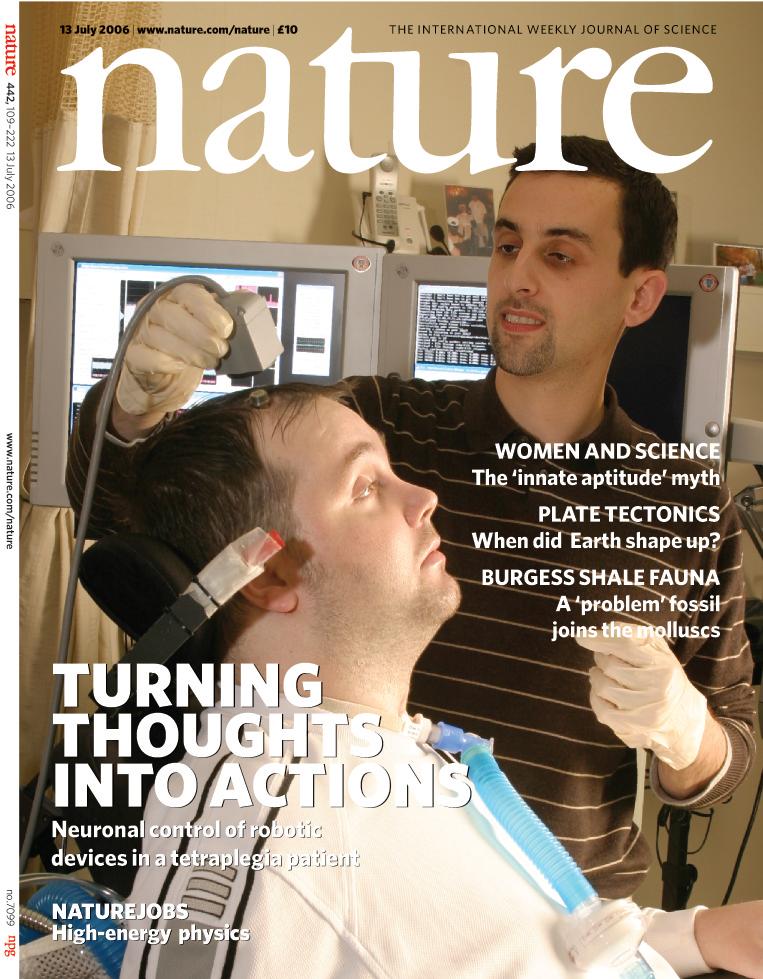
New dawn in brain-machine interfacing

Image credit: NatureScientists have made a breakthrough in their efforts to bring paralysed people the ability to use thought power alone to control artificial limbs, and to interact with computers and other electrical devices.

John Donoghue and colleagues implanted a tiny array of electrodes into the brain of a 25-year-man who is unable to move his arms or legs following a knife wound that severed his spinal cord. The brain implant allowed him to use his thoughts to check emails, play a simple computer game, change channels and volume on a TV, and to control a robotic arm. It is the first time an implant of this kind has been tested in a human.

The electrode array was implanted into the part of the man's brain that, prior to his injury, would have controlled his left arm. By forming the intention to move his arm, neurons were activated in this region, their pattern of firing was recorded by the implant and then an external computer converted the neuronal firing into a command for a mouse cursor or robotic arm.

The findings represent a significant advance on at least three fronts – the man was able to achieve this control within a few minutes of practice; he was able to chat with researchers while he was exerting mental control of the cursor, TV or robot arm; and his control was in all directions, rather than just left and right or up and down. This is in contrast to non-invasive brain-machine interfaces that rely on recording the surface electrical activity of the brain. They require weeks or months of training, demand the user’s full attention when in operation, and, until recently, only allowed one-dimensional cursor control. This new study also shows that several years after paralysis, neurons that were previously involved in controlling limbs still respond to the will to move.

However, significant hurdles remain. As well as involving surgery and the risk of infection, the device used in this trial was connected by wires to bulky computing equipment and required constant fine tuning. A fully-implantable, wireless device would be preferable. Moreover, the precise control we achieve with our natural limbs depends on constant sensory feedback from touch and proprioception – the sense of where our limbs are in space. Scientists have a long way to go before they 'close the loop' by mimicking this kind of feedback.
__________________________________

Hochberg, L.R., Serruya, M.D., Friehs, G.M., Mukand, J.A., Saleh, M., Caplan, A.H., Branner, A., Chen, D., Penn, R.D. & Donoghue, J.P. (2006). Neuronal ensemble control of prosthetic devices by a human with tetraplegia. Nature, 442, 164-171. Open access.

Link to accompanying videos. Open access.
You have read this article Brain / Technology with the title Technology. You can bookmark this page URL https://psychiatryfun.blogspot.com/2006/07/new-dawn-in-brain-machine-interfacing.html. Thanks!

Oops! How sarcastic emails fall flat

Dear Boss – Really? You’d like me to attend the Hawaii meeting?! Hang on, I might have something on, let me just check my diary…” you email sarcastically – obviously you’d drop anything to be there. But then the reply comes back “Don’t worry, if you’re likely to be busy, I’ve asked Sarah instead”.

Disaster! Another message misinterpreted because of the ambiguity of email communication, stripped as it is of any extra-linguistic cues such as gestures and intonation. According to Justin Kruger and colleagues, this kind of communication breakdown is all too common because we overestimate how likely it is that recipients of our emails will appreciate our intended tone.

Indeed in several experiments, they confirmed overconfidence in intended meaning occurred more for email than for spoken communication, and that it still occurred whether or not senders and recipients knew each other well. Recipients too overestimated their ability to interpret the intended tone of emails.

One reason is that as we compose an email, we read it to ourselves silently with our intended tone, forgetting as we do that our recipient(s) might not read it that way at all. A solution could be to read emails to yourself in a neutral tone before sending them.

Indeed, when Kruger’s team asked participants to read a sarcastic message out loud to themselves in a neutral tone before sending it, they found they were more accurate than normal at judging how unlikely recipients were to realise they were being sarcastic.

By contrast, in another study, participants sending an email of a joke were more likely to overestimate how funny recipients would think the email was, if before sending the message, they watched a video clip of the joke being performed live.

“If comprehending human communication consisted merely of translating sentences and syntax into thoughts and ideas, there would be no room for misunderstanding. But it does not, and so there is”, the researchers concluded.
__________________________________

Kruger, J., Epley, N., Parker, J. & Zhi-Wen, Ng. (2005). Egocentrism over email: Can we communicate as well as we think? Journal of Personality and Social Psychology, 89, 925-936.

Are we also uncharacteristically impatient when it comes to emails?
You have read this article Social / Technology with the title Technology. You can bookmark this page URL https://psychiatryfun.blogspot.com/2006/03/oops-how-sarcastic-emails-fall-flat.html. Thanks!